
What Does Asbestos Sheeting Look Like? How to Identify Fibro in Your Home
You have pulled a vanity out of an older bathroom, or taken a lining off a back wall, and there it is: a flat grey sheet, hard, slightly chalky at the chipped corner, nothing like the plasterboard in the rest of the house. Work stops right there, which is the right instinct.
So what are you actually looking at? There are real visual clues, and we use them every week when photos come through mid-renovation. None of them confirms asbestos on its own. They tell you how likely it is.a
Fibro at a Glance: The Short Answer
Asbestos cement sheeting is usually a rigid, flat sheet, sometimes corrugated, white to grey when unpainted and smooth across the face. The back often carries a dimpled or golf ball texture, and it is fixed with flat-headed nails in a regular grid, with the joins covered by timber, metal or cement strips. It turns up most often in homes built before the late 1980s. Sheeting is only one of many materials that can contain asbestos, and knowing what asbestos looks like across an older Victorian home gives you the wider picture.
The catch is that it looks almost identical to the modern, asbestos-free product that replaced it, so only a laboratory test settles it. South City Asbestos, a B Class licensed removalist based in Somerville, takes these calls from Mornington Peninsula renovators most weeks, and the first question we ask is always how old the house is.
What Is Asbestos Cement Sheeting & Is All Fibro Asbestos?
Fibro is everyday Australian shorthand for fibre cement sheeting, and not all of it contains asbestos. Older sheets had asbestos fibres mixed through the cement, while the modern product uses cellulose fibre and has done so for decades.
Asbestos cement is non-friable, so the fibres stay locked in while the sheet is solid and undamaged. Sheeting sitting quietly on a wall is a very different situation to sheeting smashed out with a bar.
It was used widely in Australian homes from the 1940s to the late 1980s, and all asbestos products were banned nationally from 31 December 2003. Victorian guidance is that homes built before the mid-1980s are highly likely to contain asbestos products, with anything up to 1990 still a real possibility.
Brand names cause confusion. Sheets were sold as Hardiflex, Villaboard, Tilux, Versilux and Hardiplank, and several of those names stayed on the asbestos-free products that followed.
How to Identify Asbestos Sheeting: The Visual Signs
None of these is a test. They are clues that raise or lower the likelihood, and they are what we look at when photos come through.
Colour & Surface
Unpainted sheets run white through to grey, smooth and flat across the face. Painted sheets can be any colour at all, so paint tells you nothing.
The Back of the Sheet
A dimpled, honeycomb or mesh pattern pressed into the reverse side is common on older sheets. You will only see it where the back is already exposed, such as a garage or shed wall.
Nails, Fixings & Cover Strips
Flat-headed nails in a regular grid, often sitting slightly proud of the surface. Joins are covered rather than filled, using timber D mould, aluminium or silver strips, or narrow cement battens.
Thickness & Feel
Thin, usually single-digit millimetres, hard and brittle rather than flexible. Do not flex it, tap it or snap a corner off, because testing it by hand is what turns a low-risk situation into a messy one.
Broken or Weathered Edges
An already broken edge can look fibrous or matted rather than clean and sandy. Weathered sheets on eaves and sheds often show fine surface furring and hairline cracking.
Look, don't break. A broken edge is the most useful clue there is, and it is only safe to look at when the sheet is already damaged. Breaking one to check releases exactly the fibres you are trying to avoid.
Manufacturer Stamps
Some later sheets carry "no asbestos" style markings on the back, which is helpful when you find one. The absence of a stamp proves nothing, since plenty were cut, painted or fixed with the marking hidden.
Where Asbestos Sheeting Shows Up in Older Victorian Homes
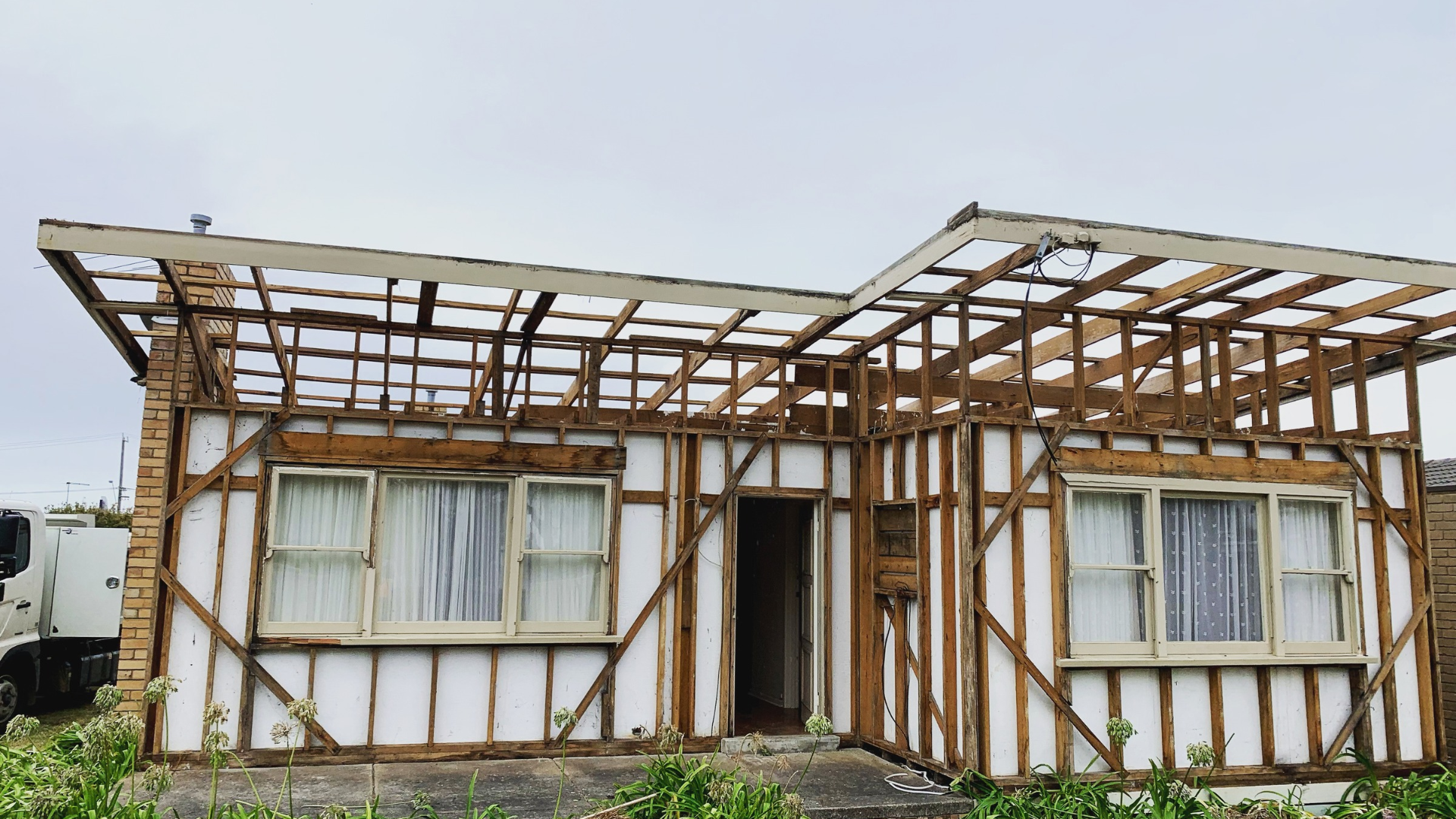
Knowing where it was normally used tells you where to slow down before the crowbar comes out.
Bathrooms, Laundries & Kitchens
Wet area wall linings, splashbacks and under-sink panels. Coloured patterned sheeting like Tilux was made for exactly these rooms.
Eaves, Soffits & External Cladding
One of the most common external locations on post-war homes, along with sheet cladding on walls and extensions. Peninsula holiday homes and older coastal cottages are exactly this housing stock.
Internal Walls & Ceilings
Internal linings are a topic in their own right, because
spotting suspect wall materials takes a different set of clues.
Sheds, Garages, Carports & Fences
Shed walls, garage linings, carport infills and fence panels, often in the worst condition because nothing has protected them. Corrugated roofing is its own job, covered on our roof asbestos removal page.
Hidden Behind Later Renovations
A bathroom redone in 2005 can still have original sheeting behind the new tiles or cabinetry. It is the build date of the original house that matters.
What Does Asbestos Cement Board Look Like Compared to Modern Fibre Cement?
This is where people come unstuck. The two share the same shape, colour, thickness range and installation method, because the modern sheet was built to replace the old one on the same job sites. Side by side on a bench, most people cannot pick them, and neither can we without a test.
Age is the strongest single indicator you have. Built before the late 1980s, treat sheeting as suspect until tested. Between then and 2003, possible. After that, unlikely. Victorian guidance draws the line at 1990, which matches what we say on the phone: built before 1990, assume it could be asbestos until a test says otherwise.
Villaboard comes up most often. It was sold as an asbestos cement lining for wet areas, and a modern asbestos-free product carries the same name today, so the name tells you nothing.
| What you're looking at | Asbestos cement sheeting | Modern fibre cement |
|---|---|---|
| Era | 1940s to late 1980s | Late 1980s onwards |
| Face | White to grey, smooth and flat | Much the same |
| Back | Often dimpled or mesh patterned | Usually plain or brand stamped |
| Feel | Hard and brittle | Less brittle |
| Fixings | Flat-headed nails, sitting proud | Screws are common |
| Joins | Timber D mould or metal cover strips | Taped and set, or modern trims |
| Confirms asbestos? | No | No |
A quick way to weigh it up: when was the original house built, where is the sheet, is the back face dimpled, how are the joins covered, and is there a stamp? Five out of five gives you a strong suspicion, not an answer. No checklist replaces a test.
Why Broken or Damaged Sheeting Is the Real Risk
Intact, undisturbed sheeting in good condition is generally low risk, which surprises people expecting bad news. The risk arrives with disturbance: cutting, drilling, sanding, snapping sheets out during a demo, or water blasting an old shed wall.
Damage also changes the legal picture. Bonded asbestos that has been badly damaged, weathered or burnt can become friable, and friable material sits under a different licence altogether.
We hold a B Class licence, which covers non-friable material. When something looks crumbly or powdery, we say so rather than pressing on, and it is worth knowing
what the difference between friable and non-friable means for your job before you book anyone in.
How a Professional Confirms Asbestos Sheeting
Everything above is about how to identify asbestos sheeting from the outside. Confirming it is a different and much shorter job. Experienced removalists can tell you how likely something is, but nobody can confirm asbestos by eye.
Our asbestos testing service runs like this:
- We attend site and look at the material in place.
- We take a small sample with controls in place to limit disturbance.
- The sample is wrapped, sealed and sent to the laboratory.
- Results come back to you, and we talk through what they mean.
- If removal is the next step, we scope and quote it.
Results normally take a few days, with a faster turnaround available at extra cost, and there is a fee for testing. There is no mystery to
how sampling and lab identification work.
Samples go to a NATA-accredited laboratory and should be collected by a competent person, not the homeowner with a chisel.
What to Do & What Not to Do If You Think You've Found Fibro
By the time someone rings us asking what asbestos sheeting looks like, there is often a pile of broken offcuts on the floor already. It is fixable, as long as the next hour is handled properly.
What not to do
- Don't break a sheet to look at the edge
- Don't drill, cut, sand or grind it
- Don't water blast old sheeting or roofing
- Don't sweep debris or vacuum it up
- Don't put broken pieces in the general waste bin
What to do instead
- Stop work in that area
- Keep people and pets out of the room
- Take a couple of photos from a safe distance
- Send them through with your suburb and the age of the house
The DIY question is a fair one, and
whether you can legally remove it yourself in Victoria depends on the material, the quantity and the circumstances. The risk is not only the removal. It is the clean-up, the packaging and the disposal, which is where most DIY jobs come unstuck.
Before you call, have this ready. The age of the house, where the sheeting is, whether it is damaged, two photos from a safe distance, and your suburb. That is enough for us to tell you whether testing or a removal quote is the next move.
What Happens If Your Sheeting Contains Asbestos?
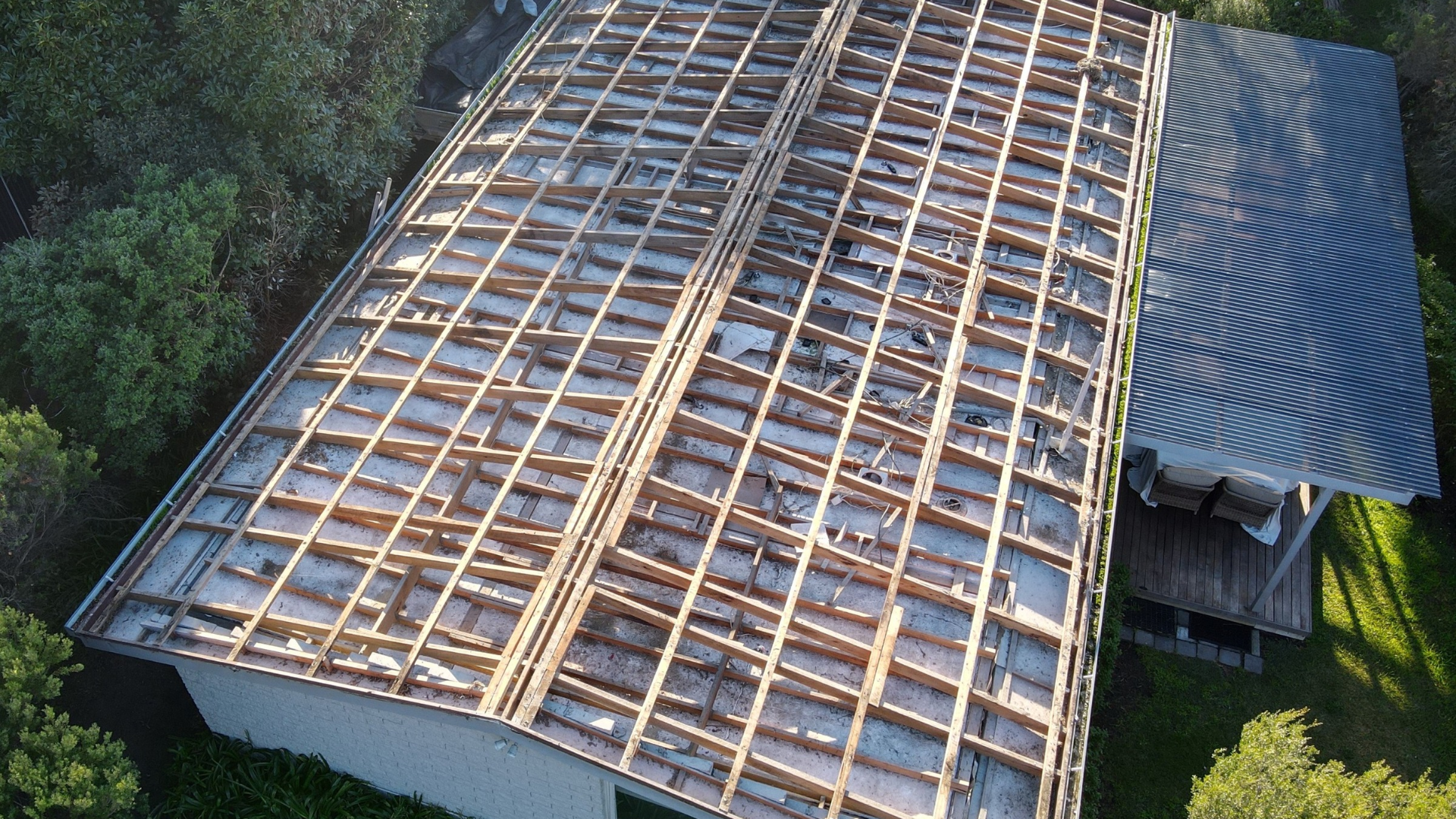
People start with "what does asbestos cement board look like" and finish on a more practical question: what a positive result means for the project. Often less than you would think. Intact sheeting in good condition can sometimes be managed in place, and removal is the answer when it is damaged or when the work ahead will disturb it.
A properly run removal has a clear shape: a scoped quote, WorkSafe notification where required, a controlled work area, careful removal of intact sheets, an independent clearance certificate and documented disposal. We include the clearance certificate in our asbestos removal quotes, because without it there is no proof the site was handed back clean.
None of it is a mystery either, and
what actually happens during a professional asbestos removal is worth reading before you book one in.
Final Thoughts
You can learn the signs, and they are worth knowing. Flat grey sheeting with a dimpled back, nailed in a grid with covered joins, in a house built before 1990, is suspect until a laboratory says otherwise. That is not a reason to panic, or to start pulling things apart to find out.
If you are standing in front of one right now, send us a couple of photos with your suburb and the age of the house, or get in touch. We will tell you plainly what the next step is.
Key Takeaways
- What does asbestos sheeting look like? Flat, white to grey, smooth on the face, often dimpled on the back, fixed with visible nails and covered joins.
- It looks almost identical to modern asbestos-free sheeting, so it cannot be confirmed by eye.
- The age of the original home is the strongest indicator. Treat sheeting in pre-1990 homes as suspect.
- Intact sheeting is lower risk. Damage and disturbance are what release fibres.
- Never break, cut or drill a suspect sheet to check it.
- A sample tested by an accredited laboratory is the only way to be sure.
Frequently Asked Questions About Asbestos Sheeting
Is all fibro asbestos?
No. Fibro is shorthand for fibre cement, and the modern product uses cellulose fibre. The age of installation is the main indicator.
How can you tell if fibro has asbestos in it?
Visual clues and the age of the home raise or lower the likelihood, but only a lab test confirms it. The sample goes to a NATA-accredited laboratory and should be collected by a competent person.
What colour is asbestos sheeting?
Usually white through to grey when unpainted, but it can be painted any colour at all, so colour on its own is not a reliable guide.
Does old Villaboard contain asbestos?
Older Villaboard was an asbestos cement lining for wet areas, and a modern asbestos-free product carries the same name today. If it could be the original sheet, treat it as suspect and test it.
Is asbestos sheeting dangerous if it isn't broken?
Intact sheeting in good condition is generally low risk, because the fibres stay locked in the cement. The danger comes from damage or disturbance that releases them into the air.
What does broken asbestos sheeting look like?
A broken edge can look fibrous or matted rather than clean and sandy. Don't handle it; isolate the area and get advice.
Can I drill or screw into fibro walls?
Not if there is any chance it contains asbestos, because drilling releases fibres straight into the room you are standing in. Get it tested first.
When did Australia stop using asbestos in cement sheeting?
It was phased out of Australian building sheets through the mid to late 1980s, and all asbestos products were banned nationally from 31 December 2003.
How long does an asbestos test take?
Results normally come back within a few days of the sample reaching the lab, and a faster turnaround is available at extra cost.
Can I remove asbestos sheeting myself in Victoria?
It is not recommended, and the rules depend on the material, the quantity and the circumstances. WorkSafe Victoria sets out what an unlicensed person can and cannot do, and the clean-up, wrapping and disposal are the parts people underestimate.