
What Does Asbestos Look Like? A Homeowner's Guide to Spotting It in an Older Victorian Home
You are halfway through pulling up an old kitchen floor, or you have just opened up a wall to run new wiring, and you have stopped cold. There is a grey sheet, or a dark tile, or a crumbly bit of lagging around a pipe, and a small voice in your head says: is that asbestos? If you are renovating an older Victorian home, that pause is a good instinct, and it is the most common reason people pick up the phone to us.
Here is the honest answer to what does asbestos look like: it rarely looks like one single thing, because it was blended into ordinary building products. Appearance and the age of your home are useful clues, but they are only clues. They tell you when to be careful, not when you are in the clear. This guide walks you through where it tends to hide in a pre-1990 home and what it can look like, so you know what to treat as suspect and what to do next.
We deal with worried renovators every week, so this is written to take the panic out of it. No scare tactics, just what we would tell you if you rang us this afternoon.
Can You Tell if Something Is Asbestos Just by Looking?
No, you cannot confirm asbestos by sight alone. The fibres are microscopic and were mixed into other materials, so a sheet or tile that contains asbestos can look identical to one that does not. What you can do is read the clues: the age of the home, the type of material, and where it sits. In a Victorian home built or renovated before 1990, the safest approach is to treat anything suspect as though it contains asbestos until a laboratory test says otherwise.
If you have found something you are unsure about, that is exactly the moment to get advice rather than guess. South City Asbestos is a licensed removalist based in Somerville, and our owner Brendan spends a fair chunk of most weeks talking renovators through exactly this: what to stop doing, what to photograph, and whether it needs testing or can be scoped for removal. A quick conversation early usually saves a lot of stress later.
First, Why You Can't Confirm Asbestos by Eye
The reason comes down to how asbestos was used. The dangerous part is the fibres, and they are around 50 to 200 times thinner than a human hair, so you will never pick them out by looking. On top of that, asbestos was almost always bound into something else: cement sheeting, floor tiles, insulation, textured coatings. What you are looking at is the host material, not the fibres, and that host material looks like plenty of harmless products from the same era.
So a "that looks like asbestos" guess is never enough to act on, in either direction. Plenty of safe modern sheeting looks the part, and plenty of genuine asbestos has been painted over and blends right in. That is the whole reason
why you can't confirm asbestos by eye, and why the only thing that settles it is a lab test on a safely taken sample. Everything below helps you narrow down what is worth testing, not skip the test.
What Does Asbestos Look Like in Australia, and When Was It Used?
The strongest clue you have is the age of the building. Asbestos was used heavily in Australian homes from the early 1900s right through to the 1980s, and it was not fully banned across the country until the end of 2003. That ban is worth knowing, because it draws a clean line: any home built or renovated before then can contain asbestos, and the older it is, the more likely that becomes.
For a simple rule of thumb in a Victorian home:
- Built before the mid-1980s: highly likely to contain asbestos somewhere.
- Built between the mid-1980s and 1990: quite possible, worth assuming until tested.
- Built after the 2003 ban: very unlikely, though older materials can still turn up in later work.
This matters locally more than most people realise. A lot of the housing across the Mornington Peninsula and Bayside, the older fibro homes, post-war brick houses, beach shacks and holiday places, sits squarely in the era most likely to contain it. If that describes your place, age alone is reason enough to treat suspect materials with care and to
assume asbestos until it's tested.
Where Asbestos Hides in an Older Home, Room by Room
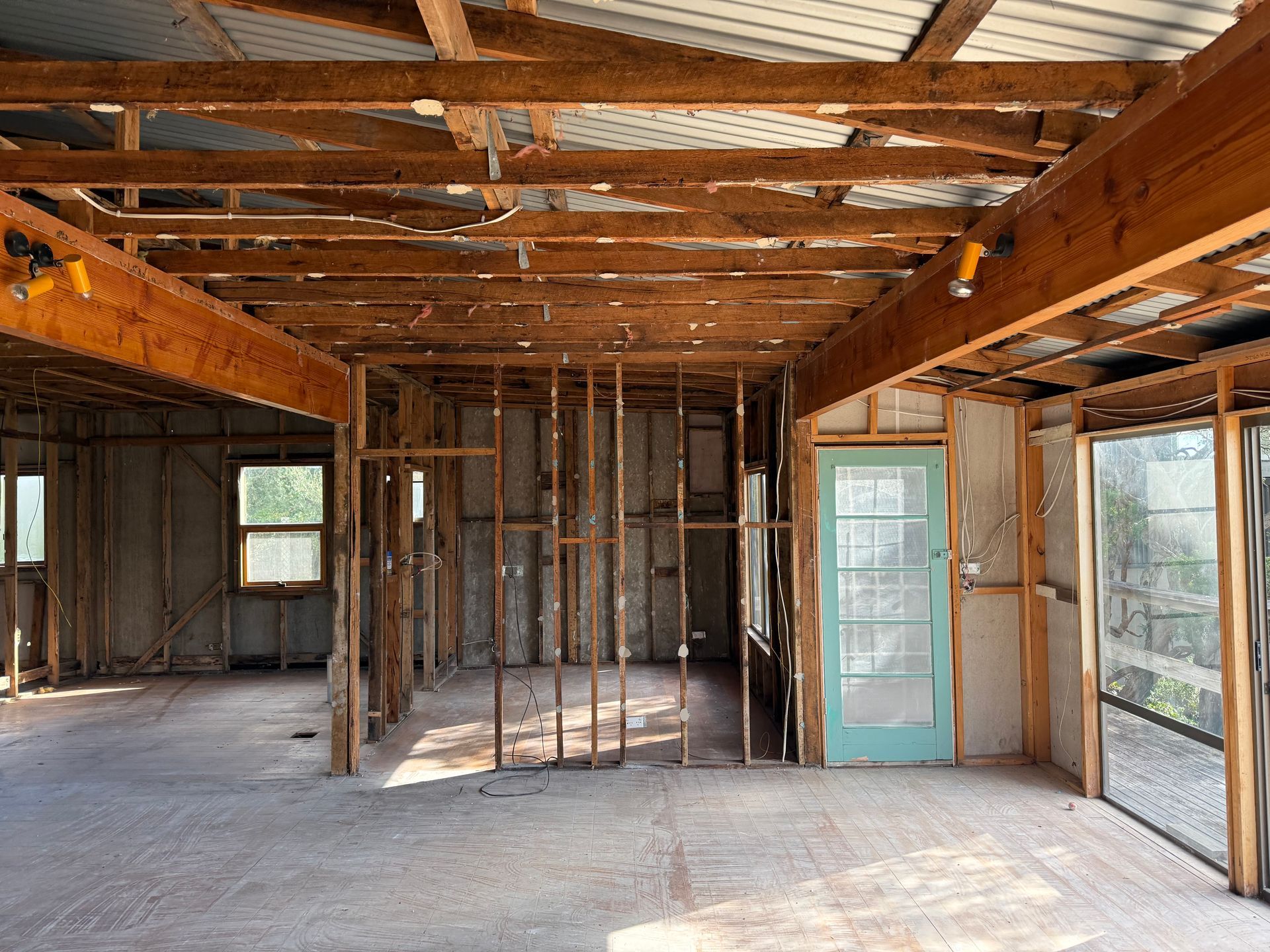
When people ask us what does asbestos look like around the house, the most useful answer is a tour of where it tends to sit, because the location is half the clue. Here is a quick reference, then we will go through the main spots.
| Where to look | What it can look like | Often mistaken for |
|---|---|---|
| Wall and eave sheeting | Flat or corrugated grey-white rigid sheets, sometimes dimpled | Modern fibre-cement, Villaboard |
| Ceilings | Flat sheeting or a bumpy textured finish | Plaster, decorative render |
| Floors | Old vinyl tiles and sheet lino, dark glue underneath | Ordinary retro flooring |
| Roofing, fences, sheds | Corrugated or flat grey sheets, weathered, lichen-spotted | Cement or fibreglass sheeting |
| Pipe lagging | Paper-like wrapping or chalky grey-white coating | Plaster, old insulation |
Asbestos cement sheeting (fibro)
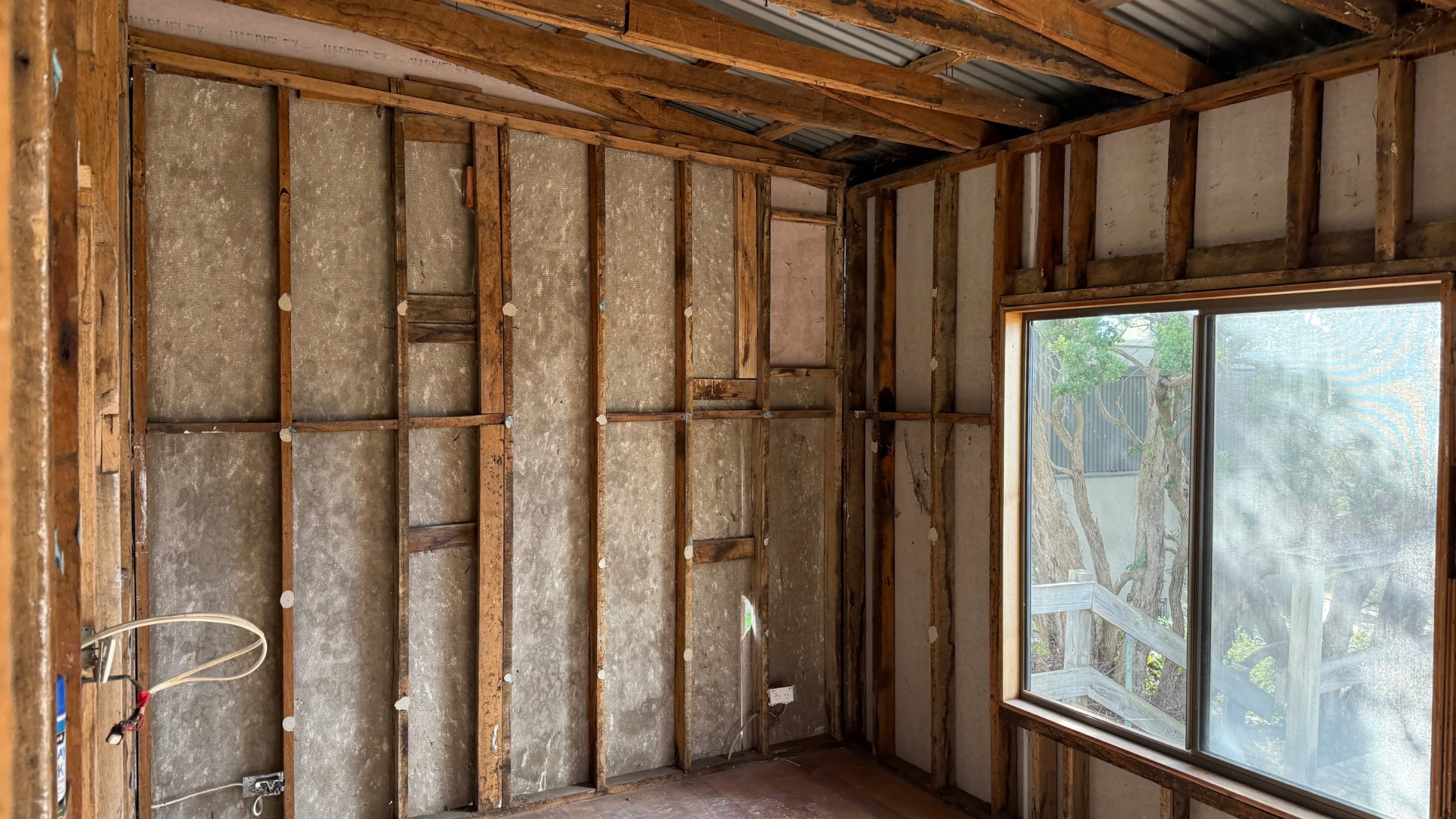
This is the big one. Asbestos cement sheeting (fibro) is the most common bonded material we see in Victorian homes. It shows up as flat or corrugated sheets, hard and rigid, grey to off-white, and sometimes with a dimpled or speckled pattern on one face. It was used for internal walls, bathroom and laundry linings, eaves, sheds, garages and fences. The catch is that it looks almost identical to modern fibre-cement board, so learning to identify asbestos cement sheeting by eye only takes you so far, and a test is the only way to be sure.
Walls
Internal wall linings are worth a second look, because a sheet that looks like plasterboard can be asbestos board in an older home. The risk here is practical: people drill, cut or sand into a wall to hang a cabinet or open up a room before it has been checked. If the home is pre-1990 and the lining is a hard sheet rather than modern plaster, it pays to know what asbestos can look like in walls before any power tool goes near it.
Ceilings
Two things to watch for overhead: flat ceiling sheeting, and a textured or decorative ceiling finish, sometimes called a popcorn ceiling, from the peak asbestos years. Ceilings are a high-caution area because disturbing them tends to shower fibres down over a wide area, so it is worth knowing what to look for in a ceiling before you scrape or drill on a hunch.
Floors
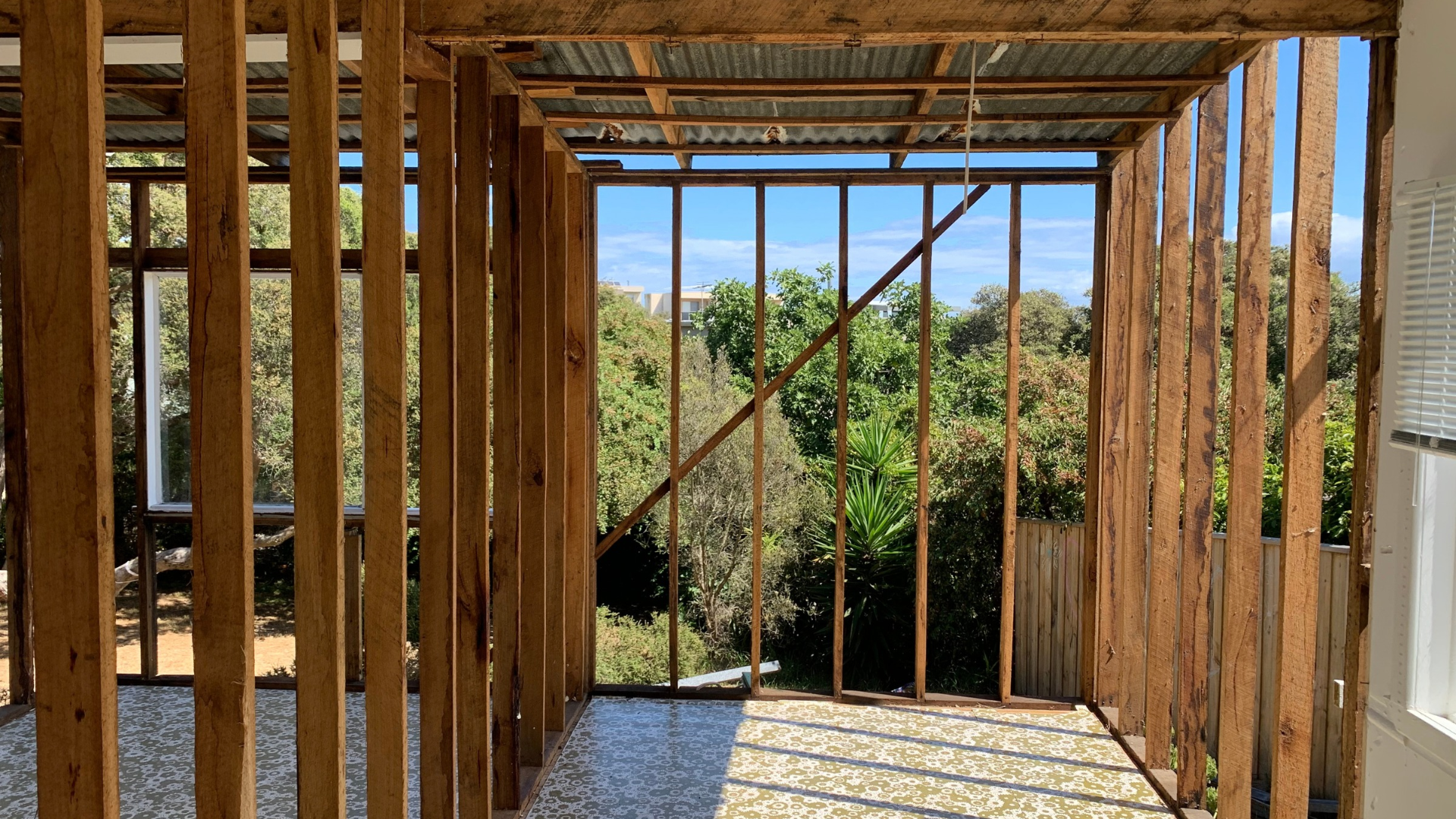
Old vinyl floor tiles, sheet vinyl and lino are common culprits, along with the dark, tar-like glue underneath, often called black jack. Dark-coloured tiles from the 1950s to 1980s are a classic cue. Worth knowing: the backing and the adhesive can contain asbestos even when the tile on top does not, which is what makes asbestos floor tiles and vinyl riskier to lift than they look.
Eaves, fences, sheds and roofing
The outdoor materials are the ones people forget. Corrugated asbestos roofing, including the profile often nicknamed Super Six, along with eaves and soffits, fencing, sheds, gutters and downpipes, all commonly contained bonded asbestos. Outside, it tends to be grey, off-white or a weathered brown, often with lichen or moss from years in the weather.
A backyard fence or shed project is one of the most common ways people disturb it without realising, precisely because these are
the outdoor materials people forget. If an old roof turns out to be the culprit, taking it off is a licensed job in its own right, which is why safe
roof asbestos removal is work for a professional crew rather than a weekend on a ladder.
Pipe lagging and loose-fill insulation
Around old pipes, you might see a paper-like corrugated wrapping or a chalky grey-white plaster coating. This category, along with any loose-fill insulation, can be friable, meaning it crumbles easily and releases fibres more readily than a solid sheet. That is a higher-risk group and a clear sign to stop and get a professional in rather than handle it yourself. It is not a reason to panic if it is intact and left alone, but it is a reason not to poke at it.
Does Asbestos Look Like Dust? Busting the Most Common Myths
This one comes up constantly, so let us be clear. Once asbestos is disturbed, it can throw off what looks like ordinary dust, and it is a fair thing to wonder about. But the fibres that actually do the harm are microscopic and invisible to the naked eye. You cannot look at a pile of dust and know whether it is dangerous, which is exactly why a "it just looked like normal dust" judgement is unreliable and unsafe.
This is where a few common myths need putting to bed, starting with
whether you can see or smell asbestos: you cannot smell it, you cannot reliably see the individual fibres, and there is no trustworthy way to confirm it just by eye. If you have already made dust from a suspect material, the important thing is what not to do next: do not sweep it and do not vacuum it with a normal vacuum, because that just flings the fibres back into the air. Leave it, close the area off, and get advice.
Bonded vs Friable: Why the Difference Matters When You're Looking
Most of what you will find in a Victorian home is bonded (non-friable) asbestos, where the fibres are locked into a solid product like cement sheeting. While it is intact and left undisturbed, bonded material is low risk, and that is really the answer to whether asbestos is dangerous if you don't disturb it. Friable asbestos is the other category: loose-fill, some pipe lagging, and anything that has degraded to the point it crumbles under light pressure. That is higher risk because the fibres release far more easily.
The reason this matters while you are identifying things is simple: the danger comes from disturbing material, not from it merely being there. A fibro wall that is painted and solid is not actively harming anyone. The same wall attacked with a grinder is a different story. It is also why we are upfront about scope. We are licensed for bonded, non-friable removal, and knowing
the difference between friable and non-friable asbestos is what tells us whether a job is ours to do or needs a different pathway.
You Think You've Found Asbestos. What Now?
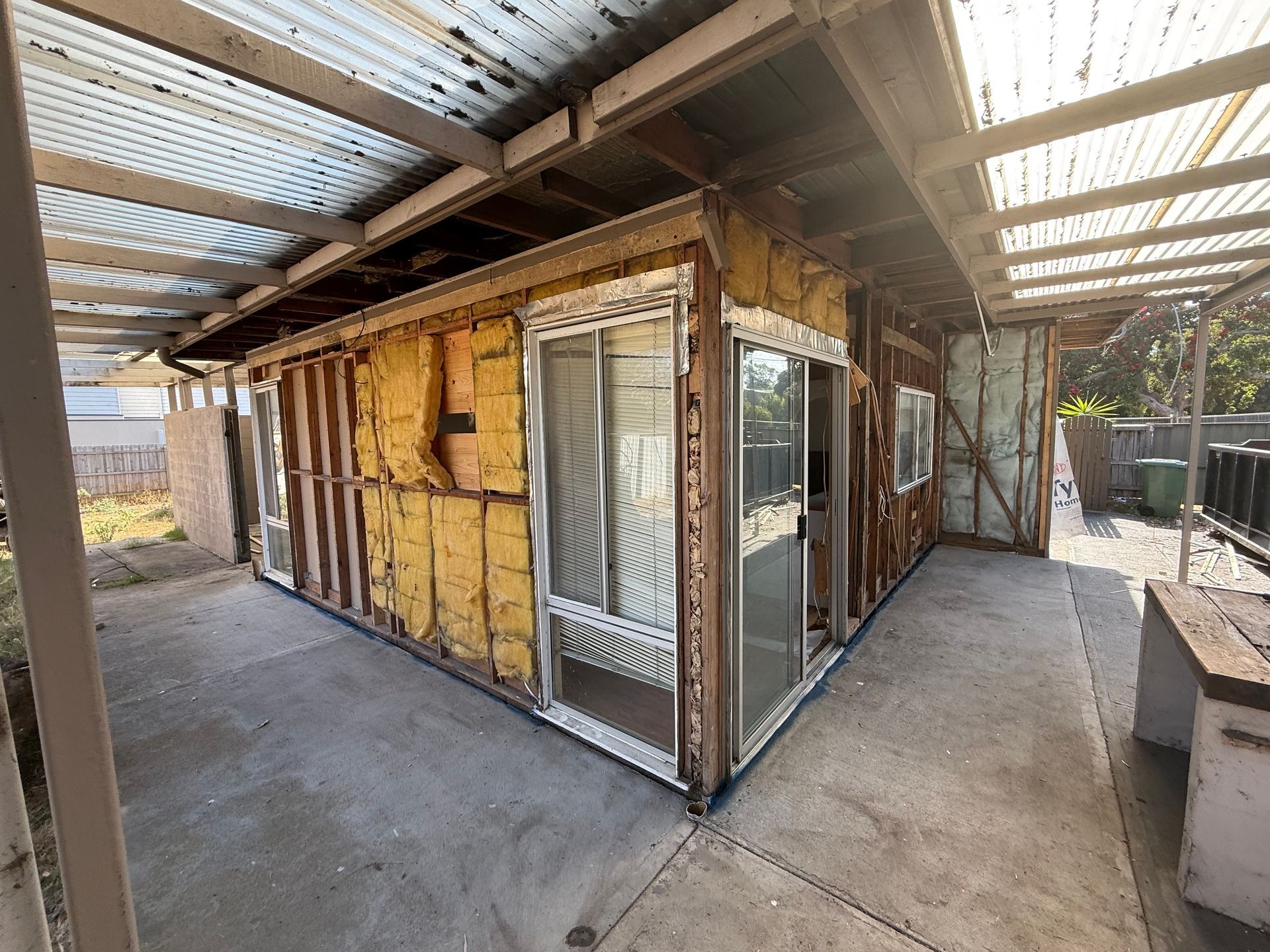
First, take a breath. Finding suspect material mid-reno is stressful, but knowing what to do the moment you have found asbestos mid-renovation covers you completely. Here is what we tell people to do, in order:
- Stop work in that area straight away.
- Keep people and pets out of the space.
- Do not cut, sand, drill, sweep or vacuum it, and do not try to clean up any dust.
- If you can do it safely from a distance, take a couple of clear photos.
- Get advice before you touch it again.
This is the point where a quick call does the most good. Send us your suburb, the rough age of the house, and those photos, and we can usually give you a good steer on whether it is likely asbestos and what the sensible next step is. Brendan takes these calls himself, and often, if you are local, he will come and look.
If you are worried about your own exposure rather than the material, that is a question for your GP, not for us, and there is no harm in asking them. And if you are still in the planning stage, running through an
asbestos pre-reno checklist before demo day is the best way to avoid the surprise altogether. On bigger jobs, where a builder is stripping a pre-1990 home back to the frame, this comes up constantly, and an
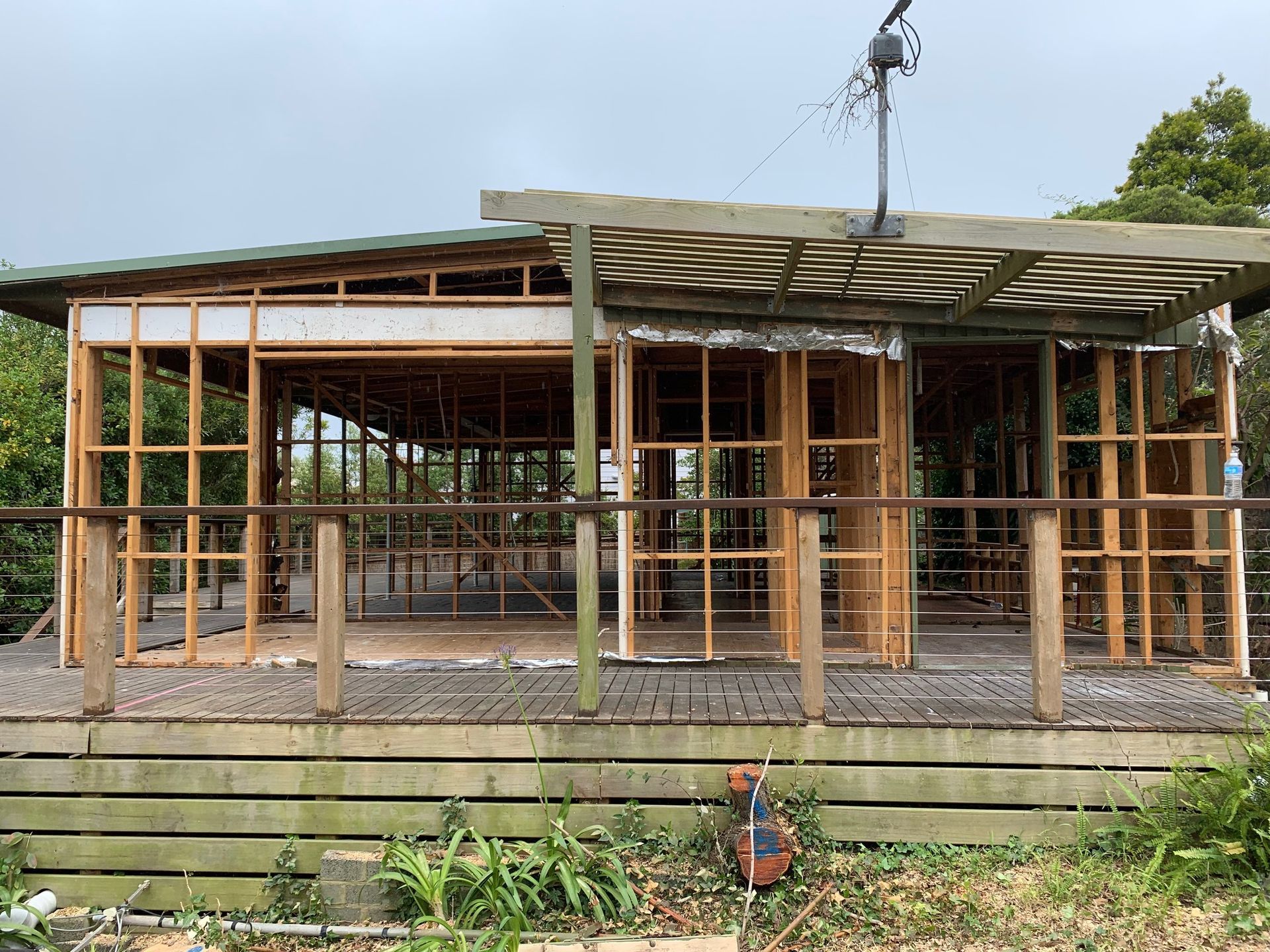
internal strip-out is exactly when concealed asbestos surfaces across walls, ceilings and floors all at once.
How Asbestos Is Actually Confirmed
Everything above narrows down what is suspect. Only one thing confirms it. Asbestos testing means a small sample is safely taken and sent to an accredited laboratory that examines it under a microscope and tells you, definitively, whether asbestos is present. That lab result is the confirmation, and nothing else is. DIY sampling is risky, because breaking off a piece of suspect material is itself a way to release fibres, which is why it is better handled by someone set up to do it safely.
This is the part of our service people find most reassuring. We attend, safely take the sample, send it off, and come back to you with the result and a plain-English explanation of what it means and what your options are. There is a fee for testing, and a faster turnaround is available if you need the answer quickly. If it comes back positive, we can scope the removal from there. You can see how we handle it on our
asbestos testing service page, and there is more on
how sampling and lab identification works if you want the detail.
A Local Note for Peninsula and Bayside Homes
There is a reason this guide is aimed at older Victorian homes rather than being generic. The housing stock across the Mornington Peninsula and Bayside skews exactly to the era most likely to contain bonded asbestos: older fibro homes, post-war houses, and the coastal shacks and holiday places that have been added to over the decades. If you own one of these, the odds that there is some asbestos somewhere on the property are genuinely high, and that is not cause for alarm, just a reason to check before you renovate.
Being based in Somerville and working across the Peninsula, this is the housing
the South City team deals with day in and day out, so we understand
why the local housing stock matters when it comes to asbestos, and we know the common spots and quirks of the older builds around here.
The Bottom Line
Appearance and age are useful clues, but they only ever tell you what to treat as suspect. They never confirm asbestos, and they never rule it out. In a Victorian home built or renovated before 1990, the safe move is to assume anything questionable could contain asbestos, avoid disturbing it, and get it tested so you know for certain.
If you have found something and you are not sure, you do not have to work it out alone.
Get in touch with your suburb, the age of the house and a photo or two, and we will tell you the safest next step, whether that is a test, a removal, or simply leaving it be.
Key Takeaways
- You cannot confirm asbestos by sight. Visual cues only tell you a material is suspect, never that it is safe.
- The strongest clue is age. If a Victorian home was built or renovated before 1990, assume asbestos may be present. All asbestos was banned in Australia by the end of 2003.
- Bonded asbestos, like fibro cement sheeting, is common in older homes and is low risk while it is intact and undisturbed. The danger comes from cutting, drilling or breaking it.
- It hides almost anywhere: wall and ceiling sheeting, textured ceilings, old vinyl floors and their dark glue, eaves, fences, sheds, roofing and pipe lagging.
- Once disturbed, fibres can look like ordinary dust, but the harmful ones are microscopic and invisible. You cannot see or smell them.
- Only an accredited laboratory test confirms asbestos. If you are unsure, stop, do not disturb it, and get it tested.
Frequently Asked Questions About Identifying Asbestos
What does asbestos look like in an older home?
It rarely looks like one single thing, because it was blended into everyday building products. In older homes it usually turns up as cement sheeting, floor tiles, textured ceilings, eaves, fences and pipe lagging, so the material just looks like ordinary building products of its era. Appearance and age are clues worth acting on, but only a laboratory test confirms whether asbestos is actually present.
Can you identify asbestos just by looking at it?
Not reliably. The fibres are microscopic and mixed into other materials, so a sheet or tile that contains asbestos can look identical to one that does not. You can flag something as suspect based on its age and type, but confirmation always needs a sample tested at an accredited laboratory.
Does asbestos look like dust?
When it is disturbed, asbestos can create dust that looks completely ordinary, but the dangerous fibres in it are invisible to the naked eye. You can never judge safety by how dust looks. If you have created dust from a suspect material, do not sweep or vacuum it; close the area off and get advice.
What colour is asbestos?
Raw asbestos can be white, brown, blue or grey, but once it is mixed into building products or painted over, those colours are hidden. In practice, colour is not a reliable way to identify it in a home. A weathered grey sheet is worth treating as suspect based on its age and type, not its shade.
What does asbestos cement sheeting (fibro) look like?
Fibro shows up as flat or corrugated rigid sheets, grey to off-white, hard to the touch, and sometimes dimpled or speckled on one side. It was used on walls, eaves, bathroom and laundry linings, sheds and fences. Because it looks almost identical to modern fibre-cement board, testing is the only way to be certain.
How do I know if my home has asbestos?
The biggest indicator is the build era. A Victorian home built or renovated before 1990 should be treated as potentially containing asbestos, and anything before the mid-1980s is more likely than not to have some. Rather than guessing from appearance, the reliable path is to have suspect materials tested before you start any work that would disturb them.
Is asbestos dangerous if I don't disturb it?
Bonded asbestos in good condition and left alone is low risk. The danger comes from cutting, drilling, sanding or breaking it during renovations or demolition, which is what releases fibres into the air. That is why the safest approach in an older home is to identify it first and avoid disturbing it, rather than discovering it the hard way mid-job.
What should I do if I think I've found asbestos mid-renovation?
Stop work in that area, keep people and pets out, and do not cut, sweep or vacuum anything. If you can, photograph it from a safe distance, then contact a licensed professional to test or assess it. Send through your suburb and the age of the house, and we can guide you on whether testing or removal is the right next step.
Can I remove asbestos myself?
It is not recommended, and friable asbestos cannot legally be removed by an unlicensed person. Even bonded asbestos carries real risks around contamination, clean-up, packaging and disposal, so a licensed removalist is the safe and compliant choice. The removal itself is only part of it; the paperwork and disposal matter just as much.
How is asbestos officially confirmed?
A licensed professional safely collects a sample and sends it to an accredited laboratory, which identifies whether asbestos is present. That lab result is the only reliable confirmation, in either direction. No visual inspection, home kit or online photo comparison can replace it.